

Indoor plants create cozier, calmer spaces and make apartments feel more lived-in. From a miniature pothos spilling from a window to a snake plant in a dusty corner, the mood of any room can be utterly transformed by green leaves, but the difficulty arises when trying to keep houseplant life blooming indoors.
Why do some plants suddenly die? Why do some just sit around all year and never grow? And others are slowly rotting below the surface in perpetually damp soil. Based on internal plant care studies conducted in 2025, a startling 60% of new plant owners say irregular plant care routines are the primary cause of dying indoor plants.
In reality, thriving plants don’t really need complicated care. It’s usually only light, proper watering and the right amount of stability that indoor plants demand. These simple indoor plant care routines should help achieve vibrant, flourishing houseplants without the incessant panic over them dying on you.
The single most common indoor plant killer is the default watering schedule. Most people are tempted to water on set dates no matter what.
But some plants need a more frequent watering schedule than others, and a pothos in direct sunlight is going to drink a lot more than a snake plant tucked into a shaded corner. The climate inside apartments also tends to fluctuate, and the air can get hotter than usual during the summer without direct sunlight.
Don’t assume you should water every few days or every week—poke your finger about an inch into the soil. If it’s still damp, leave your plant alone for a day or two longer.
These hot-weather houseplant watering tips will really be useful during heatwaves, as you’re likely to overcompensate for wilting with extra watering and further harm the roots.
A basic soil check can prevent more plant issues than any pricey fertilizer or gadget.
Lighting, above all other factors, is the most important factor affecting indoor plants. Some are natural lovers of bright, indirect light; others flourish in low-light indoor plant environments for houseplants.
Low-light indoor plants like
They work so well in apartment environments because they’re not as sensitive to being a little further away from a window.
However, even these low-light lovers still need indirect light for part of the day, or they will inevitably begin to weaken, and the leaves will start to thin and die. If your leaves are reaching for light from the window, you’re probably dealing with poor lighting conditions and could use more.
The air inside an apartment can get surprisingly dry during both the summer, with the air conditioner running, and during the winter, with the heating system turned on. It is better to have a holistic set of summer plant watering tips.
Since most tropical houseplants grow in naturally humid environments, they need additional humidity, or they will
Indoor plant care routines involving humidity might actually be more important for your apartment plants than you realize, and adjusting the humidity can dramatically affect leaf health.
Here are a few tips for indoor plant humidity lovers:
Ferns, monsteras, and calatheas will thrive with the help of some extra indoor humidity for plants.
A report on houseplant growth hacks and care trends showed that humidity is indeed one of the primary factors causing distress for these exotic plants, so make sure to get it right.
Houseplants are inherently attracted to light.
By turning them every couple of weeks, the opposite side of the plant will receive more light, resulting in an evenly grown plant.
Rotation will really help keep apartment plants happy and evenly growing during periods of more extreme daylight shifts, like during the summer. The intensity of sunlight increases drastically in rooms with large windows during the summer, and if you're not rotating, one half of your plant will be receiving more intense rays than the other.
The trick is that it doesn't take very long to accomplish this simple task and will drastically help with an even, full-looking houseplant.
Apartments can heat up quickly in the summer, and if they have very large windows that get direct sunlight all afternoon, plants might be experiencing more than just simple warmth. Heat stress in houseplants has many of the same symptoms as underwatering, including wilting, leaf drop, and even the death of the entire plant.
Rather than overwatering, if you're finding that your plants are really struggling and showing signs of distress due to the heat, try moving them a bit away from the window or installing light curtains to soften the sun's rays. Consistent temperatures make plants happier than drastic temperature swings.
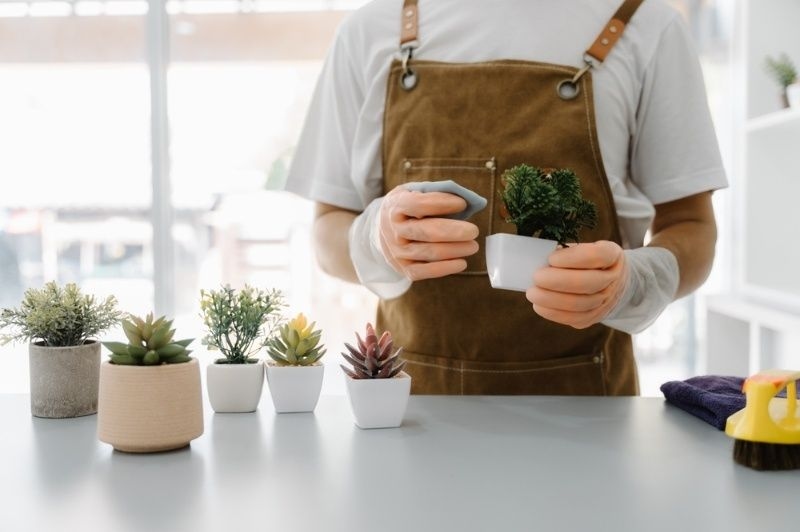
Dust builds up easily on plants, blocking light and preventing them from absorbing sunlight and conducting photosynthesis efficiently. Dust in apartments builds up fastest in homes where windows are frequently open due to traffic or in high-dust areas (like near a construction site).
Periodically cleaning your plants by simply wiping them down with a damp cloth will be beneficial. The key is to keep plants' leaves clean to ensure they can absorb as much light as possible. It will greatly benefit rubber plants, monstera, and fiddle-leaf figs, given their large leaves.
The goal of houseplant care isn't to create a complicated ritual. Consistent habits, rather than complex tasks, will be most helpful to your plant over time.
This might mean checking your plants' soil every Monday, rotating them monthly, wiping their leaves off once every few weeks, and providing consistent light throughout the day.
With this list of common indoor plant issues and effective organic remedies, you will soon have a home filled with healthy, thriving greenery! Now you know how to grow a plant with 7 effective tips and care.
Visit our website to check out our effective, organic indoor plant care solutions that will make it easier than ever to care for your plants.
An overwatered indoor plant may exhibit symptoms such as yellowing leaves, soft stems, and mold on the soil surface. Drooping plants despite moist soil are a definite sign of too much water. It is crucial to water only when the soil is no longer damp.
Even the lowest-light-tolerant indoor plant care routines require a minimum amount of indirect light to thrive. Plants kept in completely dark spaces will suffer considerably and likely die due to their inability to photosynthesize. And definitely, it is better for every plant to receive the sunlight for maximum growth and food production.
Most indoor plants will benefit from infrequent fertilization, particularly during their active growth periods in spring and summer. However, overuse of fertilizer can damage roots and cause leaves to burn. Moreover, one can even add natural fertilizers, such as vermicompost, to promote plant growth.
This content was created by AI